
.avif)

Table of Contents
Overview
Fuel is one of the largest and most unstable expenses in trucking. For small trucking fleets, diesel price swings don’t just affect a weekly fuel bill. They influence load pricing, cash flow timing, and overall margin stability. Without scale or dedicated forecasting, volatility can ripple faster and hit harder.
A Look at Fuel’s Downstream Impact on Cash Flow, Scheduling, and Daily Operations
For small fleets, fuel isn’t just a cost. It’s the most frequent financial decision in the entire operation.
And for many fleets of this size, it’s also the least transparent line on the P&L because the way fuel is priced, reported, and explained makes it hard to see what’s actually being paid.
That lack of clarity matters because fuel is also the cost that sets everything else in motion. When a fleet can’t easily explain why fuel spend changes from one week to the next, cash flow tightens and other costs start getting managed reactively instead of deliberately.
The thing is, fuel isn’t just about the price. It also needs to be understandable. When fuel spend makes sense week to week, it makes the rest of the operation easier to manage.
How Fuel Costs Take Shape in Small Fleets
The American Transportation Research Institute (ATRI) Operational Costs of Trucking report shows average fuel cost was about $0.48 per mile in 2025. But that figure mixes fleets of all sizes, including very large carriers with hundreds of trucks that often get volume pricing, and have sophisticated fuel risk management.
Fleets with fewer than 26 trucks spend about 20% more per mile on fuel than fleets with more than 1,000 trucks. That’s because small fleets often face structural cost disadvantages relative to large carriers:
- Retail fueling vs wholesale/rack pricing: Small fleets typically fuel at truck stops at retail pricing, which results in a higher net cost per gallon compared to fleets that access bulk pricing
- Lack of bulk rate purchasing: Large fleets can negotiate pricing programs based on volume; small fleets typically can’t
- Less sophisticated monitoring/controls: Small operations usually have fewer tools for fuel management, which means they see more exceptions, theft/misuse, or spend leakage over time.
All of these factors contribute to small fleets paying a consistently higher net cost per mile for fuel.

What You’re Really Paying for Every Gallon
Fuel cost isn’t a single number. It’s the result of several layers interacting at once.
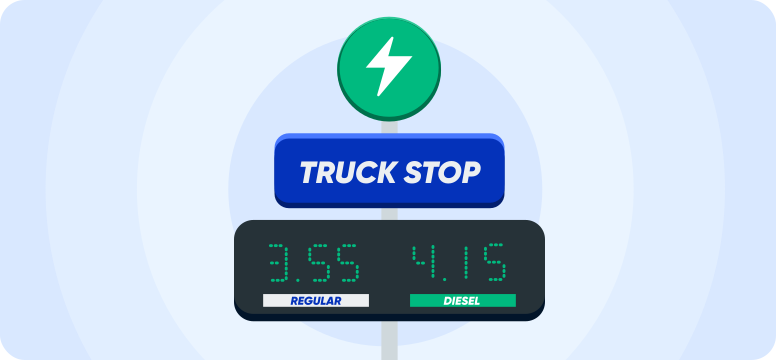
The posted pump price is the most visible, yet least informative, number on its own. And beneath that sits the pricing structure behind the fleet’s fuel card: how discounts are calculated, whether pricing varies by location, and how fees are applied.
Fuel cost actually consists of:
- Posted retail price on the sign
- Pricing structure (retail minus vs cost plus vs “better of”)
- Network/program discounts
- Rebates
- After-the-fact fees (e.g. transaction/swipe, network, late fees)
- Behavior deviations, misuse, exceptions
Most small fleets can see the first layer more easily. The second and third layers are where variation and unexpected cost can accumulate. When those layers aren’t transparent, fuel spend can shift meaningfully each week without an obvious explanation. That makes it harder to plan, harder to catch issues early, and harder to distinguish normal variation from something that needs immediate attention.
A fleet’s net price per gallon, what they actually pay after all discounts and fees, is what should inform decisions, not sign price alone.
Where Fuel Spend Drifts Higher Than Expected
When fuel costs creep up, it’s rarely random. In small fleets, overspend can follow a handful of repeatable patterns that grow more expensive the longer they go unnoticed:
One of the least visible, and most costly, is inflated pump pricing. Many large national chains raise their posted prices and then advertise aggressive “discounts” off that higher baseline. On paper, the savings look meaningful. In practice, fleets can actually end up paying more per gallon than they would at locations with lower starting prices and smaller discounts.
Fees add another layer of leakage. Transaction fees, network fees, late fees, and other after-the-fact charges don’t always appear where fleets expect them. Advertised discounts may still look intact on the surface, but by the time statements are reconciled, those fees have already offset, or even erased, the perceived savings.
Pricing blind spots compound the issue. When week-to-week changes in fuel spend can’t be clearly explained by location mix, fees, or usage patterns, even well-run fleets lose precision. Without a clear, all-in view of what’s being paid, cost variation gets normalized, and as fleets grow, that lack of clarity compounds in the background.
Behavioral drift is more subtle, but just as persistent. As fleets add drivers and direct oversight becomes less immediate, fueling behavior naturally shifts. Drivers fuel off-route, choose familiar stops under time pressure, or prioritize uptime and convenience over price or policy. None of these decisions stand out on their own. Together, they create steady, compounding upward pressure on spend.
Slow detection plays a role as well. Fraud, misuse, or simple irregularities rarely announce themselves with dramatic spikes. They show up as slightly higher gallons, repeated small transactions, or patterns that only become clear over time. When insight arrives late, correction becomes expensive, or impossible.
Support gaps can amplify all of this. When unexpected charges appear, pricing is confusing, or misuse is suspected, many small fleets are left navigating resolution on their own. Slow responses or generic support allow small issues to linger, eroding clarity and turning preventable problems into real cost.
What Control Actually Looks Like in Practice
Effective fuel control doesn’t come from micromanaging drivers or overly complex number crunching. It starts with clarity; knowing what fuel actually costs week to week and how quickly changes show up across the operation.
ATRI’s 2025 industry report shows that fleets paid an average of $0.48/mi for fuel, so even tiny drift matters. For example, if a fleet sees $0.60/mile in sustained fuel cost, they’re paying roughly 20% above industry average, which is a real performance flag worth investigating.
Below are operational metrics to run every Friday:
- All-in net price per gallon after fees, rebates, discounts
- MPG by truck (rolling 4 weeks) and fuel cost per mile
- Exception % rate (outside geo fence, odd hours, multiple swipes, over-tank gallons)
- % variance from plan to see early warning signs of cost drift
In addition, here are policy controls that don’t micromanage drivers:
- Route-based, preferred stops and allowed alternates
- Geo-fencing with alerts
- Velocity checks such as purchase location/time vs truck location
- Daily gallon caps based on expected MPG and tank size
- Real-time alerts for split transactions or repeated small swipes
The Bottom Line
In small fleets, fuel isn’t where problems start, it’s just the fastest feedback loop, hitting cash immediately and showing how well the operation is holding together as conditions change.
When fuel spend can be understood quickly, it gives fleet operators an early read on whether the system is holding together or beginning to strain.
The core issue isn’t price. It’s whether fuel behaves like a known input or an after-the-fact surprise. When fuel spend is understandable with enough time to act on it, it stops reshaping the week and starts informing better decisions across the business.
That’s when fuel becomes a stabilizer instead of a stress multiplier, strengthening the system rather than opening up cracks in the operation.
Where to Go From Here
If you do nothing else: calculate your true fuel cost per mile every week. Use a short checklist to help surface where pricing variability, fees, or fueling behavior are driving unexpected spend.
Compare small fleet actuals vs these benchmarks:
- Good: ≤ $0.55/mi
- Typical: $0.56–$0.60/mi
- Flag: > $0.60/mi
A fuel cost per mile consistently above $0.60/mi likely signals:
- Poor fuel card pricing
- Excessive out-of-route fueling
- Idle time getting out of control
- Fuel theft or misuse
Align decisions across the operation.
Share this article with anyone involved in fueling, dispatch, or cash planning so fuel decisions support stability—not just
immediate convenience.
Add structure where pressure starts.
The Mudflap Fuel Card helps small fleets stabilize fuel spend—the earliest and most frequent operating cost—so maintenance planning, cash flow, and uptime can be managed together.
Explore the Cost Savings Playbook.
A practical guide to how fuel, maintenance, downtime, cash flow, and utilization interact—and where small upstream changes can unlock lasting stability